
Causeway Coast Road Trip Guide: Explore Northern Ireland’s Scenic Coastal Route

The Causeway Coast, a 185-kilometre or 115-mile drive along the Northern Coast of Ireland, is one of those rare places where every bend in the road reveals something different. Cliffs rise and fall, the landscape changes from rugged to calm in moments, and small villages appear unexpectedly, often with a café, harbour or viewpoint that invites you to stay a little longer than you had planned. For travellers who love history, scenery and culture, Northern Ireland offers some of the most memorable moments you will find anywhere on the island.
Exploring in your NewWay rental car allows you to connect the dots between stops on the Causeway Coastal Route at your own pace. You can pause when the light catches the cliffs in a certain way or take a detour to a viewpoint that you would miss on a timetable. With NewWay, you can drive from the Republic of Ireland into Northern Ireland without extra fees because cross-border cover is included as standard, making it simple to enjoy the full coastline without worrying about insurance or paperwork.
Practical travel planning advice
Driving into Northern Ireland from the Republic is straightforward. There are no checkpoints on the border, and the road simply continues, although a few things change the moment you cross.
- Speed limits and distances switch to miles instead of kilometres, so keep an eye on the signs as you drive. Your EU or Irish driving licence is fully valid, and visitors from outside the EU can use their home licence for short trips.
- Northern Ireland uses pounds sterling rather than euros. Most places accept cards, but it is handy to have a small amount of cash for rural car parks or small cafés along the route. Your mobile provider may apply different roaming rules, so check before you travel.
- With NewWay, cross-border travel is included with your booking, giving you full insurance cover on both sides of the border without any hidden charges. That means you can take your time exploring this coastline, stopping wherever you like, without thinking about extra costs. Check out our first timers guide to renting a car in Ireland for more car rental advice.
FAQ for your Causeway Coast road trip
How long is the Causeway Coastal Route?
The coastal route runs for 185 kilometres or 115 miles from Belfast to Derry.
How long does it take to drive the route?
The full route takes around 3.5 to 4 hours without stops, although most travellers spend two to four days exploring it properly.
Where should I start my trip from?
Many travellers begin in Belfast and finish in Derry for a natural coastal flow and a gradual build in scenery.
What types of roads will I be driving on along the Causeway Coast?
The route includes coastal A‑roads, scenic stretches and some narrow rural sections, especially near Torr Head.
When is the best time to visit the Causeway Coastal Route?
April to September offers the best conditions, while winter brings a quieter feel but shorter daylight hours. Many of the smaller cafes in more rural locations may also close earlier in winter.
Where should I go after the Causeway Coastal Route?
Many travellers continue their journey into County Donegal, crossing back into the Republic of Ireland and joining the Wild Atlantic Way. This northern section is known for dramatic headlands, remote beaches and peaceful coastal drives that feel beautifully untouched. It makes a natural extension to your Causeway Coast adventure and adds another layer of scenery and culture to your trip.
The Causeway Coast: stop by stop
Carrickfergus
After leaving Belfast, Carrickfergus is one of the first places that begins to ease you out of the city vibes and into the rhythm of the coast. Its castle stands right by the harbour, a Norman stronghold that has watched over Belfast Lough for more than 800 years. You can walk around the exterior or step inside the thick stone walls to explore its stories of sieges, kings and maritime battles.
The seafront here is calm, with boats in the harbour and a long walkway that offers gentle views across the water. It is a lovely introduction to the slower pace that lies ahead on this trip. The cafés along the promenade are ideal for a warm drink before continuing the journey north.
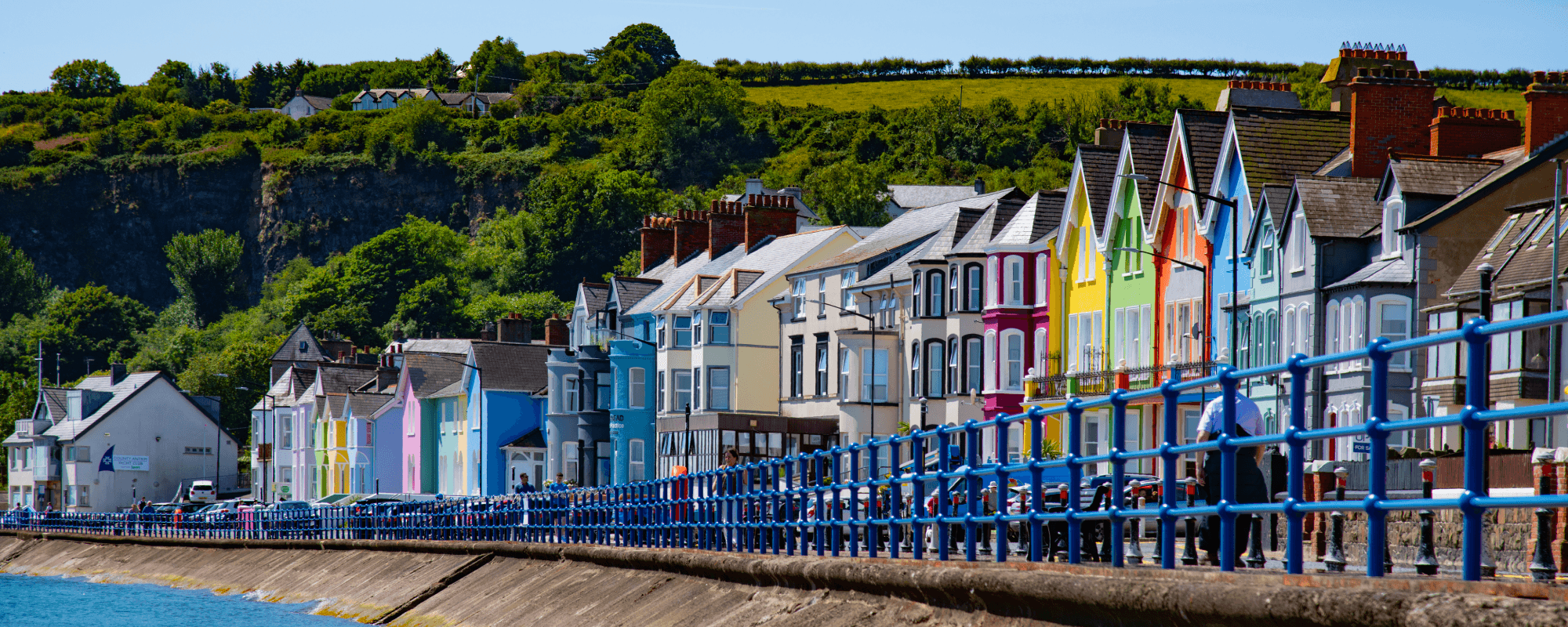
Leaving Carrickfergus and continuing along the shoreline, the road gently leads you towards the colourful seafront houses of Whitehead, a cheerful coastal town that adds a bright splash of colour and a photo stop to the early part of the journey.
The Gobbins
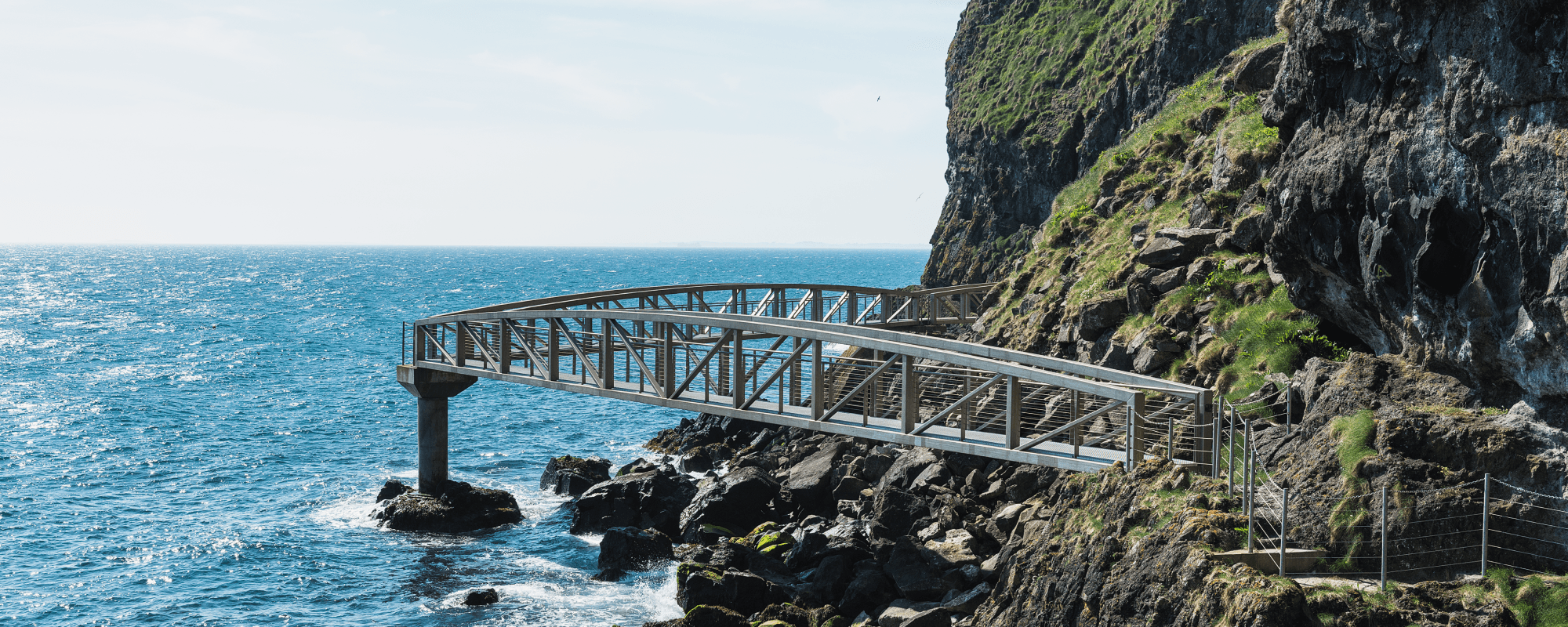
The Gobbins is one of Europe's most dramatic attractions, a cliff-side pathway built into the rock face. The walk is guided only, so book early to avoid disappointment.
This part of the coast feels exposed to the elements in the best possible way. Waves crash against the rocks and seabirds wheel through the air. The experience here is not just about the attraction itself but the sense of wildness that surrounds it.
Driving onwards, the road begins to settle into a pattern of curves that follow the shoreline. Villages appear briefly, with stone houses, small harbours and local shops that give a sense of everyday life along the coast.
Glenariff Forest Park
Stepping away from the sea brings you into Glenariff Forest Park, a lush valley often called the Queen of the Glens. It offers a beautiful contrast to the cliffs and coastline, with waterfalls cascading down mossy rocks and wooden walkways weaving through the trees.
The air here feels fresher and cooler, especially on warm days when the forest canopy creates a natural shelter. Many travellers take a gentle walk to the falls, enjoying the quiet atmosphere before returning to the coast. Glenariff is a reminder that the Causeway Route is not only about the sea but about the landscapes hidden behind it.
On the road again, the glens stretch out around you, with winding lanes that disappear into the hills. Sheep graze lazily on the slopes, and the coastline begins to feel remote in a way that encourages slower driving and more frequent stops.
Cushendun
Cushendun is a small coastal village that feels timeless. Designed in the early 20th century to resemble a Cornish fishing village, it has a unique charm with whitewashed cottages, a peaceful river mouth and gentle curves of shoreline.
It is the kind of place where you park the rental car, take a short stroll, and instantly relax. The Cushendun Caves are a short walk away and offer a natural, atmospheric detour. They are especially lovely in softer light, when the colours of the rock become deeper and richer.
The village has a way of slowing the day down. Many travellers pick up a coffee, sit by the water and enjoy the quiet before continuing towards one of the most dramatic stretches of the route.
Torr Head
The road to Torr Head is narrow, steep and not suitable for large vehicles, like buses, but in a rental car it becomes one of the most exhilarating parts of the journey. It twists around cliffs, rises sharply above the water and offers views that stretch across to Scotland.
On clear days, the outline of the Mull of Kintyre appears in the distance. The sight feels almost unreal, as if the two coastlines are united across the sea. This is a place for slow driving and careful navigation, not because of difficulty but because every corner reveals a view more dramatic than the last.
Many people consider Torr Head one of the highlights of the entire route. It is wild, beautiful and completely absorbing.
Ballycastle
After the drama of Torr Head, Ballycastle feels warm and welcoming. It is a lively seaside town with a friendly harbour, long sandy beach and plenty of places to pause. The promenade has a relaxed atmosphere, especially in the afternoon when families wander along the water, and the light softens across the bay.
Ballycastle is also one of the best places along the coast for classic fish and chips. Many travellers pick up a takeaway from one of the local chip shops and bring it down to the harbour to enjoy by the water. Sitting on a bench with the smell of salt and vinegar mixing with sea air is one of those simple moments that becomes a highlight of the trip.
Suggested places to stay:
A well-known beachfront hotel with bright rooms, sea views and a central location near the harbour. It works especially well if you want to take the ferry to Rathlin Island.
Corratavey Guesthouse
A homely guesthouse just a short walk from the seafront. It is known for warm hospitality, quiet rooms and a hearty breakfast.
Carrick a Rede
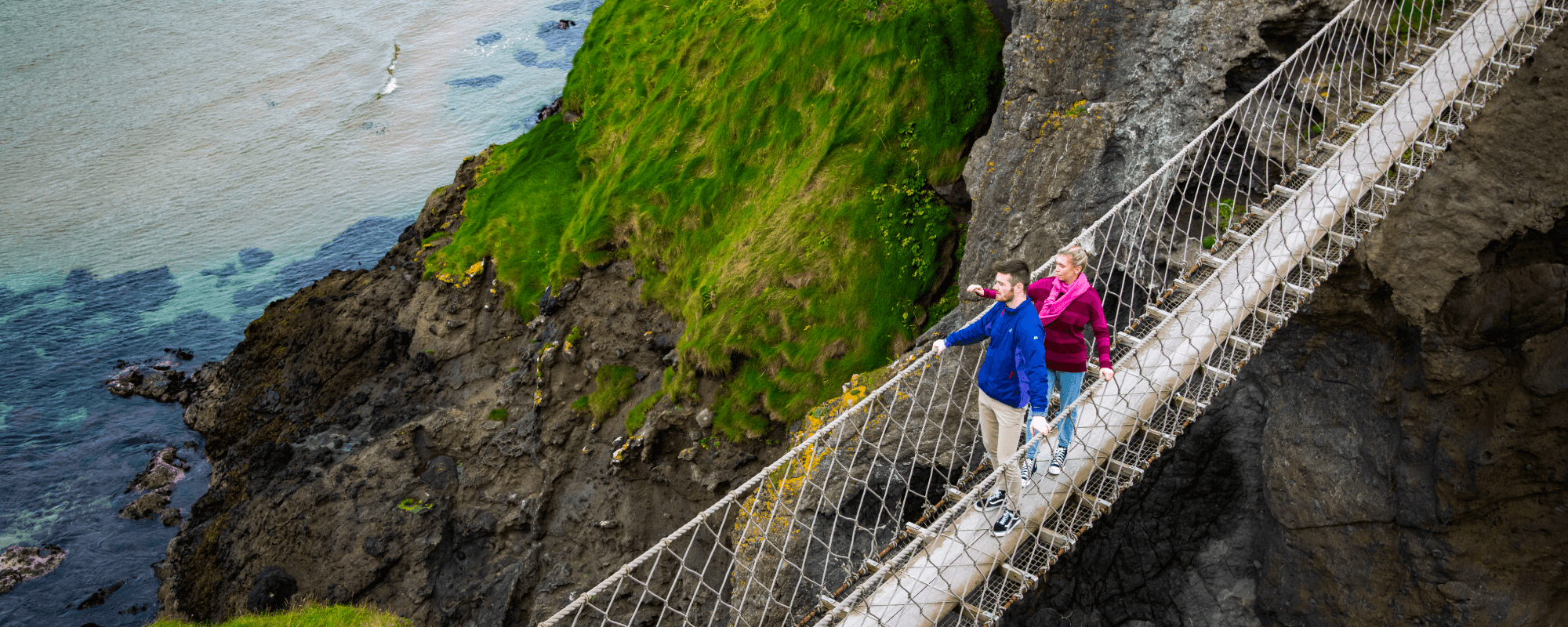
Carrick a Rede is an iconic stop, famous for its rope bridge that connects the mainland to a small island used by salmon fishermen for centuries. Even if you choose not to cross, the cliff top walk is spectacular, with views across turquoise water and rugged rocks below.
The area is often lively with visitors, but early mornings or late afternoons tend to be quieter. The sea here changes colour throughout the day, shifting from deep blues to lighter greens depending on the weather.
Parking is available at the visitor centre, and the walk to the bridge offers plenty of photo opportunities. It is a place that combines natural beauty with a sense of adventure, even for those who prefer to stay on the viewing paths.
Ballintoy Harbour
Ballintoy Harbour is one of the most atmospheric places on the Causeway Coast. Hidden at the end of a narrow lane, it feels sheltered from the rest of the world. The small harbour is surrounded by dark volcanic rock and cliffs that rise gently around it, creating a natural amphitheatre.
Visitors often spend much longer here than planned. Rock pools glisten in the sunlight, fishing boats rest quietly at their moorings, and the air carries a peaceful stillness that is rare along busier stretches of the route. It is a lovely place to explore on foot, following the paths that lead out along the rocks or simply sitting on a bench watching the waves roll in.
Giant’s Causeway
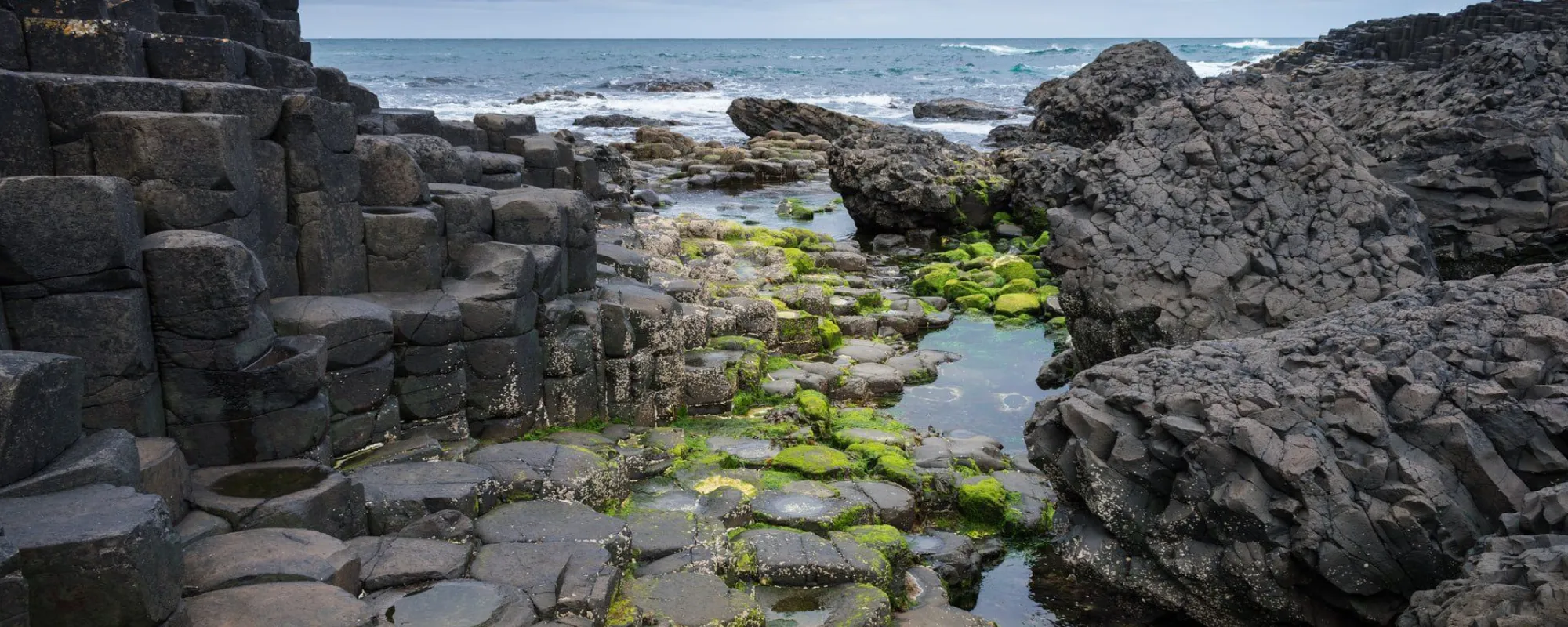
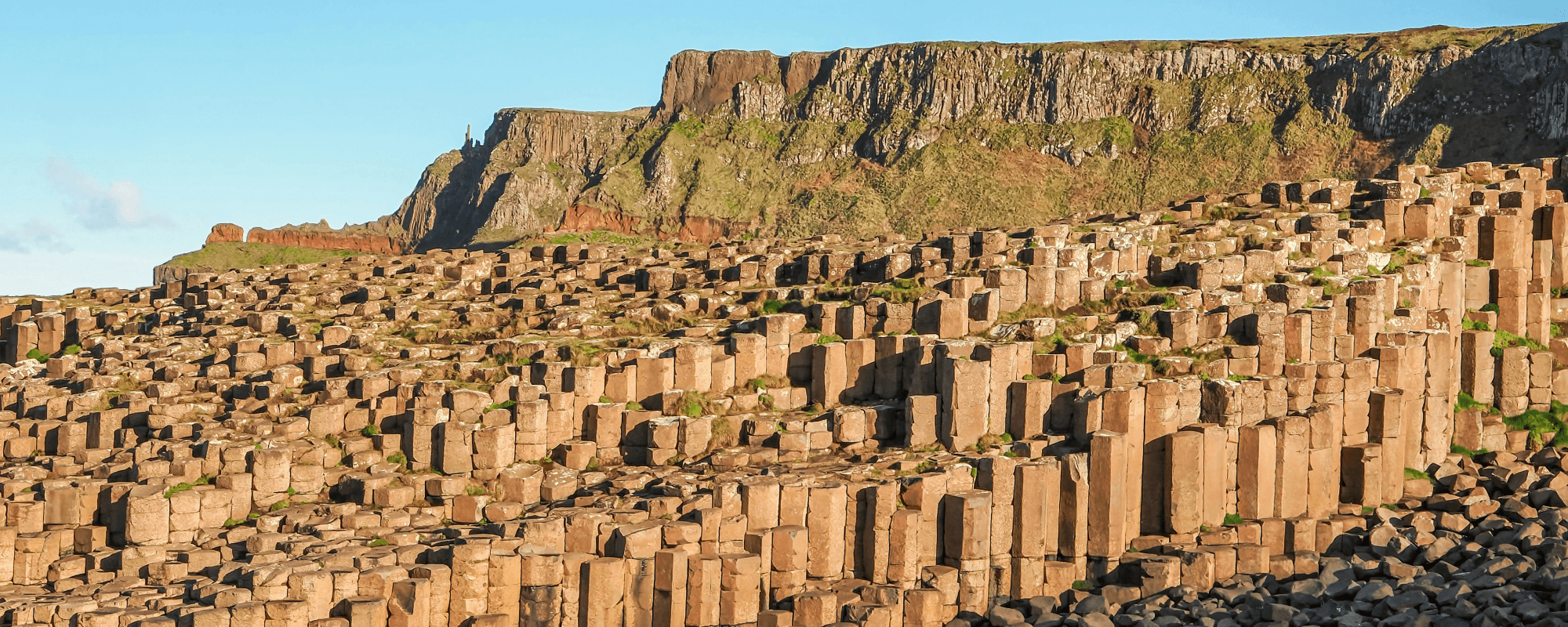
No visit to the Causeway Coast is complete without experiencing the Giant’s Causeway itself. The geometric basalt columns stretch out towards the sea, creating a landscape that feels both ancient and otherworldly. Formed by volcanic activity millions of years ago, the stones have inspired myths and stories that still shape local culture today.
Arriving early or later in the evening brings a quieter experience, with fewer people on the stones and softer light across the cliffs. The cliff top trail above the Causeway offers some of the best views in the area and is worth taking before descending to the main site.
The visitor centre provides helpful information and context, but the stones themselves are what make the place unforgettable. They feel solid beneath your feet, weathered by time and tide, and the sound of the sea adds to the atmosphere.
Bushmills
Bushmills offers a pleasant pause after the drama of the Causeway. The village is known for its long-running whiskey distillery, which has been producing spirits for more than four centuries. Even if you are not touring the distillery, the village itself is charming, with stone buildings, boutique shops and cosy cafés that make it ideal for wandering.
It is also a convenient base for exploring nearby attractions. Many travellers stay here overnight because it is central and has a welcoming, relaxed feel.
Suggested places to stay:
One of the most atmospheric places to stay on the route. The inn has open fires, cosy rooms and a long-standing reputation for food and hospitality.
Causeway Hotel
Located right beside the Giant’s Causeway visitor centre. It is perfect if you want early access to the trails before the crowds arrive.
Dunluce Castle
Dunluce Castle captures the imagination immediately. Perched on a cliff edge, it appears almost suspended above the sea. The ruins are dramatic and atmospheric, with arches and walls that frame the ocean beyond.
The castle has a long and occasionally turbulent history, with stories of shipwrecks, noble families and dramatic storms that shaped its fate. Walking through the ruins gives you a sense of the past in a way that photographs never fully capture.

Portrush
Portrush introduces a bit of seaside fun into the route. The town is lively and cheerful, with sandy beaches that curve around the headland. On bright days, the water sparkles and families often gather along the promenade.
It is also a fantastic place for traditional fish and chips. The shops near the seafront have long been favourites among locals and visitors, and enjoying them while sitting on a low wall overlooking the beach is a simple pleasure that suits the relaxed coastal feel.
Portrush feels welcoming at any time of year. Even on cooler days, the cafés are cosy, and the coastal walks are refreshing.
Portstewart
Portstewart carries a calmer pace than Portrush, with a long beach called Portstewart Strand that stretches out in a golden curve. It is a lovely place for a gentle walk, especially in the evening when the light lowers, and the waves move rhythmically across the sand.
Many travellers stop here for an early evening meal, often choosing fish and chips from a local spot and enjoying them beside the sea. The sound of the waves makes it easy to linger longer than planned, especially after a full day of sightseeing.
The town centre is compact and friendly, with plenty of cafés, bakeries and small shops to explore before continuing towards one of the final highlights of the route.
Suggested places to stay:
A stylish boutique hotel in the centre of town. It blends comfort with a touch of luxury and has a popular restaurant and bar.
Cul Erg House
A well-regarded guesthouse known for warm hospitality, excellent breakfasts and a peaceful atmosphere close to the promenade.
Downhill Demesne and Mussenden Temple
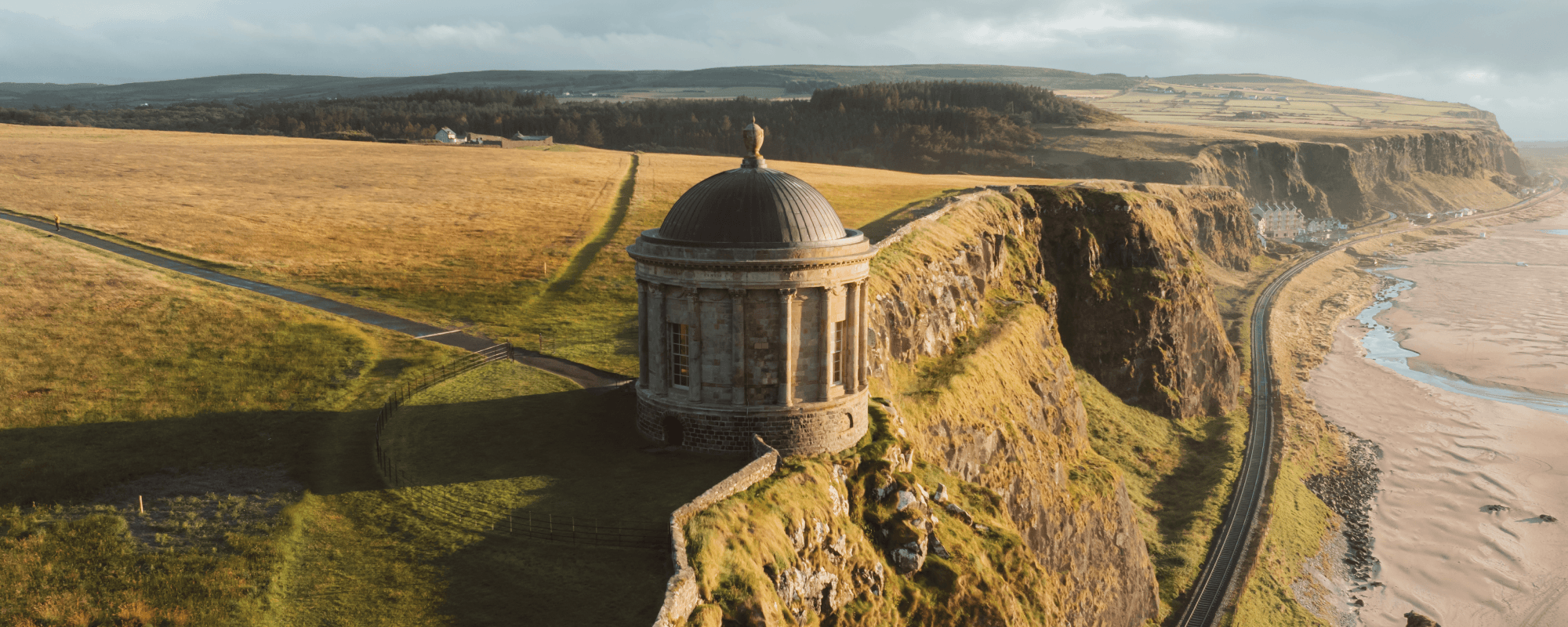
Downhill Demesne is a wide-open clifftop estate with sweeping views across the coastline. Walking through the grasslands towards Mussenden Temple offers one of the most striking vistas along the route. The temple sits dramatically close to the cliff edge, and on clear days, you can see far along the beach below.
This area feels peaceful and expansive, with space to wander and take in the view from different angles. The sound of the wind across the grass and the openness of the landscape create a sense of calm that is a fitting end to a coastal journey.
Northern Ireland: Where the coast stays with you
The Causeway Coast is more than a road trip. It is a journey through landscapes shaped by time, communities shaped by the sea and stories shaped by tradition and legend. Exploring it with your own car allows you to slow down when the scenery draws you in, linger in villages that feel welcoming and enjoy those small, spontaneous moments that make travel meaningful.
Whether you travel for two days or four, this is a journey that stays with you long after the last cliff fades from view. If you feel it is time to start planning your own Causeway Coast journey, booking a car with NewWay makes everything easier. Cross-border cover is included as standard, there are no hidden fees, and you can explore both Northern Ireland and the Republic at your own pace. Choose the car that suits your trip and enjoy the freedom of discovering the coastline in a way that feels relaxed, flexible and completely your own.