

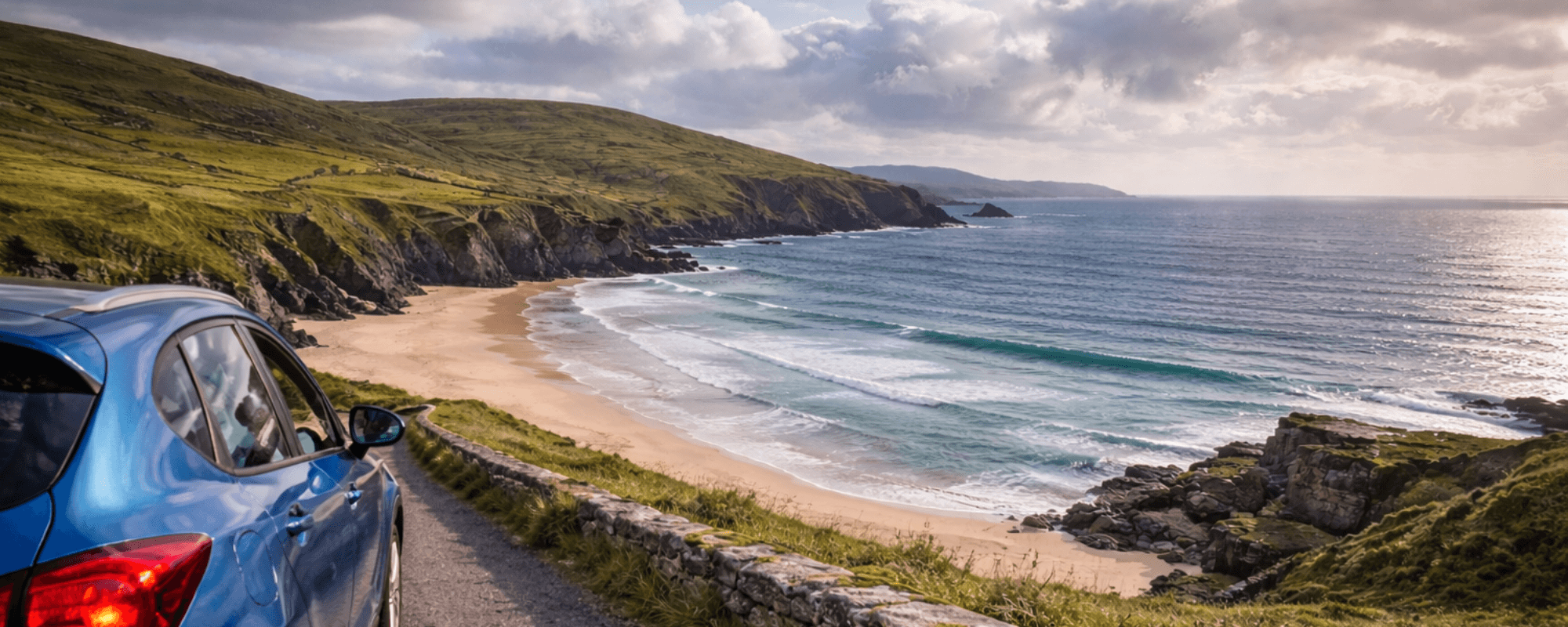
Choosing the right rental car is one of the most important decisions you will make when planning a trip to Ireland. The car you choose can shape the type of trip you have; could there be anything worse than being cramped on a driving holiday? At NewWay, we understand that your choice of rental car depends on who you are travelling with, where you plan to go and what you feel comfortable driving. Every journey is different, and the right rental car should support the experience you want to have from the moment you leave the airport.
Based on what we see every day, many visitors to Ireland arrive with more luggage than planned as cars in Ireland tend to be smaller than what many visitors from North America are used to. It is also common for travellers to read forums and be active on Facebook Travel Groups before in the planning stage of their trip. A popular piece of advice on those forums is to always choose the smallest car possible, usually because people feel unsure about driving in Ireland. While smaller cars can feel easier to drive in cities and on rural country roads, the smallest option is not always the best option for everyone. Your own comfort, confidence level and planned driving route are far more important than getting the smallest car at the best price. A car that feels right for you can make your days driving on Irish roads more enjoyable from the start.
This guide brings together our local knowledge and practical advice so you can select the NewWay car that fits your travel style, group size and confidence level. Whether you are visiting cities, planning a scenic road trip on the Wild Atlantic Way or bringing the family home to visit, we are here to help you choose the right car for your Irish adventure.
Driving in Ireland: What you need to know
Driving in Ireland is generally straightforward, but conditions can vary depending on where you are travelling. Understanding Ireland’s road types and local driving conditions helps you select the car that suits your comfort level. If you are exploring rural Ireland with narrow roads, a compact or crossover may feel easier to drive. If you are travelling longer distances or carrying several passengers and suitcases, a larger car with more boot space can make your journey more comfortable while also giving you a higher driving position to navigate with more confidence.
Road types in Ireland:
Motorways (M roads)
- Typically two or three lanes.
- Speed limit 120 km/h.
- You may encounter a Toll Booth or the m50 barrier free toll.
National primary and secondary roads (N roads)
- Usually one lane in each direction, sometimes up to 3 near Dublin and other cities.
Regional roads (R roads)
- These are common in rural areas connecting towns and villages.
- Narrower than national roads and have limited hard shoulder space.
- Speed limit up to 80 km/h but often driven much slower.
Local rural roads (L roads)
- Very narrow in places.
- Hedgerows, stone walls and farm entrances are common.
- May need to pull into gateways to let oncoming cars past.
- Speed limit up to 60 km/h.
Driving conditions in Ireland:
Weather
Ireland’s weather changes quickly, so it is normal to experience sun, rain and wind in the same day. It is a good idea to keep sunglasses in the car even if you do not need them outside, as low sun can make visibility difficult. Sudden showers can affect visibility too, coastal and mountain routes may experience stronger winds, fog is common along the Atlantic coast, and roads can become slippery after longer periods of rain.
Towns and villages
Ireland’s towns and villages were not designed with cars and tourists in mind. The Irish word for road, bóthar, originally referred to a cattle path, which gives you an idea of how many of our main routes first developed.
These days it is normal to come across narrow streets, compact parking spaces and one way systems in town centres. You may also see people parallel parking, doing three point turns or popping into a shop for a moment with questionable parking, especially in rural areas. Delivery vans stopping on main roads is also common and reflects a relaxed approach that would be less tolerated in the cities.
In many villages, the church, the pub and the shop are all located around a small central junction, so it helps to slow down and expect people crossing or pulling in. Traffic calming measures like ramps are also common. Google Maps will guide you through most one way systems, but it is worth reading up on roundabouts and pedestrian crossings before you arrive, as they may work differently to what you are used to at home.
Scenic routes
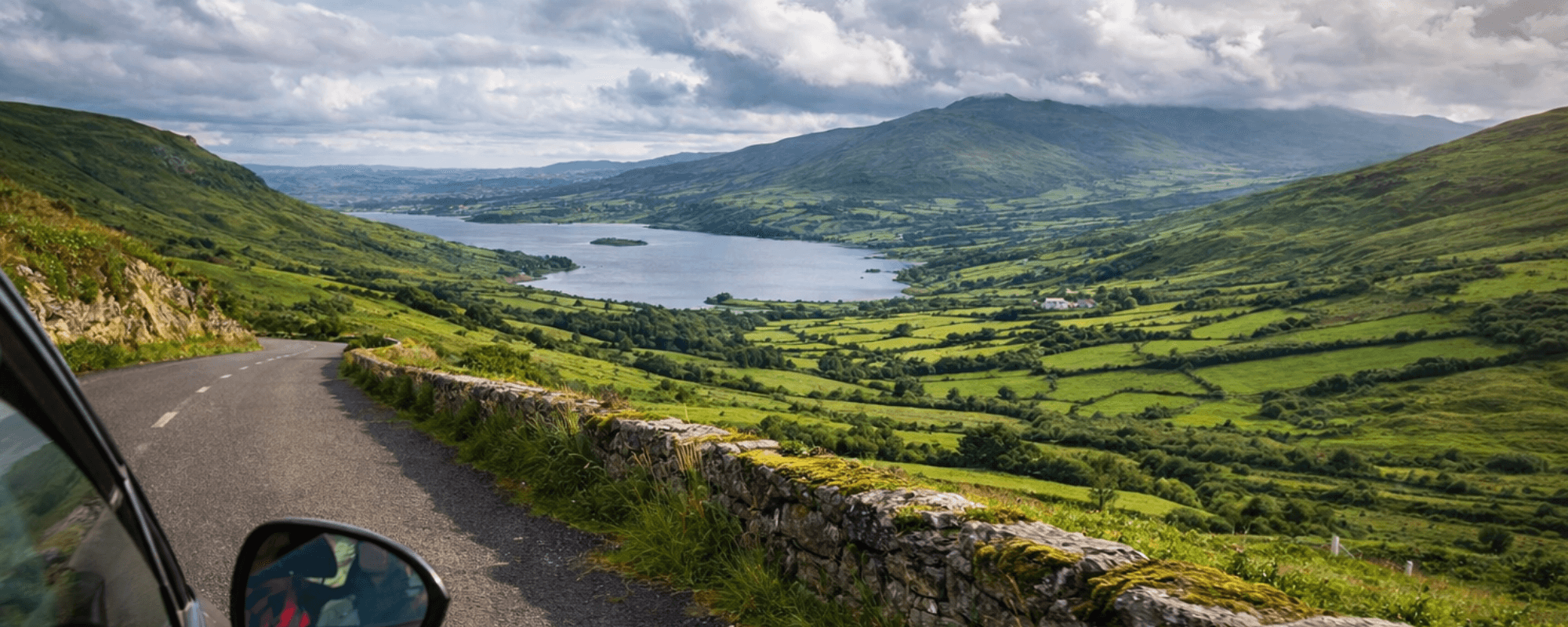
Ireland has some of the most beautiful drives in Europe, but a few of our scenic routes include sections that can feel more challenging, especially for first time drivers in Ireland. These roads are perfectly safe when taken slowly, but it helps to know what to expect so you can choose a car you feel comfortable driving. If you normally drive an automatic at home, we would not recommend switching to a manual in Ireland. There is enough to get used to without learning to change gears on unfamiliar roads.
Conor Pass in County Kerry is narrow and has sections that may not suit nervous drivers. Sky Road in Clifden has steep edges and sharp bends with limited places to pull in. The Causeway Coast in Northern Ireland features winding stretches with regular stops for viewpoints. The Burren and parts of West Cork have narrow limestone or cliff edge roads that require extra attention. These routes are stunning, but they are best enjoyed at a relaxed pace in a car that feels steady and familiar to you, especially with the added element of changing weather on top of the drive.
Choosing your Rental Car
Renting a manual vs automatic in Ireland
Choosing between a manual or automatic car is one of the big decisions for visitors renting a car in Ireland. The best choice is always the one you feel most comfortable with. We do not recommend learning to change gears during your holiday just to save a little money. If you normally drive an automatic at home, it is usually easier to rent an automatic here too, especially if you plan to explore rural areas or scenic routes with narrow bends and changing landscapes.
Manual cars are more common in Ireland and can offer good control on hilly and winding roads. They are often cheaper to rent because there are more of them available. However, your confidence and comfort level matter more than anything else when deciding between a manual and automatic car.
Choosing the right size rental car
Use the table below to quickly see which car categories suit your plans, how much luggage they can take and which models offer the extra space you might need for strollers, golf clubs or bulkier equipment. It’s always worth sizing up rather than cramming in you want everyone to travel comfortably, especially on longer days out.
If you are bringing a stroller, remember that even in an SUV you may need to pack a little lighter. If you have two children in car seats, it’s often best to choose a larger category so you have enough room for five people and luggage. An estate (station wagon) is a great option for travellers who want generous luggage space and a roomy cabin without moving into a full size SUV or people carrier.
And while a mini can technically fit four people, it’s best suited to two adults travelling comfortably, with maybe a small child at a push. Thinking about how much space you want rather than just how much you need makes a big difference to the overall experience on your trip.
| Number of People and Bags | 1 | 2 | 3 | 4 | 5 | 5+ | Large bags | Small bags | Extra equipment (Stroller, Golf Clubs etc |
|---|---|---|---|---|---|---|---|---|---|
| Mini (Hyundai i10) | ✔️ | ✔️ | ✔️ | ✖️ | ✖️ | ✖️ | 1 | 1 | ✖️ |
| Economy (Seat Ibiza / Nissan Micra) | ✔️ | ✔️ | ✔️ | ✔️ | ✖️ | ✖️ | 1 | 2 | ✖️ |
| Compact (Opel Astra / Toyota Corolla) | ✔️ | ✔️ | ✔️ | ✔️ | ✖️ | ✖️ | 2 | 2 | ✖️ |
| Compact crossover (Renault Captur) | ✔️ | ✔️ | ✔️ | ✔️ | ✖️ | ✖️ | 2 | 2 | ✖️ |
| Standard (Skoda Octavia) | ✔️ | ✔️ | ✔️ | ✔️ | ✔️ | ✖️ | 2 | 3 | ✔️ |
| Intermediate Estate (Seat Leon | ✔️ | ✔️ | ✔️ | ✔️ | ✔️ | ✖️ | 3 | 3 | ✔️ |
| Standard Estate (Octavia Estate ) | ✔️ | ✔️ | ✔️ | ✔️ | ✔️ | ✖️ | 3 | 3 | ✔️ |
| Intermediate SUV (Dacia Duster) | ✔️ | ✔️ | ✔️ | ✔️ | ✔️ | ✖️ | 3 | 3 | ✖️ |
| Intermediate SUV Hybrid (Suzuki S‑Cross) | ✔️ | ✔️ | ✔️ | ✔️ | ✔️ | ✖️ | 3 | 3 | ✖️ |
| Intermediate Crossover (Toyota C‑HR) | ✔️ | ✔️ | ✔️ | ✔️ | ✔️ | ✖️ | 2 | 2 | ✖️ |
| Standard SUV (Nissan Qashqai) | ✔️ | ✔️ | ✔️ | ✔️ | ✔️ | ✖️ | 3 | 3 | ✔️ |
| People carrier (Volkswagen Caddy) | ✔️ | ✔️ | ✔️ | ✔️ | ✔️ | ✔️ | 3 | 3 | ✔️ |
| People carrier 5+2 (Dacia Jogger) | ✔️ | ✔️ | ✔️ | ✔️ | ✔️ | ✔️ | 3 | 3 | ✖️ |
| Minibus Auto (Ford Tourneo) | ✔️ | ✔️ | ✔️ | ✔️ | ✔️ | ✔️ | 6 | 6 | ✔️ |
| Premium Auto (Audi A4) | ✔️ | ✔️ | ✔️ | ✔️ | ✔️ | ✖️ | 2 | 3 | ✖️ |
| Luxury Auto (Audi A6) | ✔️ | ✔️ | ✔️ | ✔️ | ✔️ | ✖️ | 2 | 3 | ✔️ |
For more information on our fleet check out our cars. With the right car sorted, you can enjoy every mile of your Irish trip with confidence and comfort.